
Our Natural Carpet Cleaning Process Doesn't Rely on Harsh Chemicals
Our approach is different. For most residential carpet cleaning, we do not rely on aggressive cleaning chemicals or heavy rinsing agents to get the job done. Instead, we combine our Peroixed Power® solution with professional equipment, proper agitation, multiple cleaning passes, and powerful extraction.
For advanced spots and stains, we use a powerful but fabric-safe oxidizing treatment when appropriate. For heavily soiled or greasy carpets, we can use pH boosters to increase cleaning effectiveness when the carpet condition requires it. For most in-house rug cleaning and upholstery cleaning, we also use our Peridode Power® pre-treatment.
Interview & Carpet Inspection
Before we begin, we like to tour the areas we'll clean. This lets us assess your carpet's condition, identify problem areas, and choose the right approach for your specific fiber type and level of soiling. If your carpet is loose, steam cleaning may cause it to buckle. This usually subsides within 24-48 hours. We offer carpet stretching if you'd like to tighten your carpet. We use corner guards to protect walls and moving blankets or towels to protect floors.
Our technicians are trained, educated professionals, with some holding IICRC Master Cleaner certification. Please let us know about any stains, odors, or problem areas. We have many excellent solutions. We handle pet odors, traffic lanes, commercial carpet cleaning, wine, blood, and dye stains, carpet repairs, and re-stretching.
We Don't Rely on Harsh Chemicals
Our custom-made, all-natural Peroixed Power® hydrogen peroxide solution breaks down embedded soil and allergens before the cleaning extraction begins.
Peroixed Power® is a hydrogen peroxide-based fiber cleaner with a pH range of approximately 4–6. When properly applied, its cleaning action is highly effective while remaining gentle on carpet fibers. Many conventional carpet cleaning sprays are significantly more alkaline, commonly ranging from approximately pH 9–12. These high-pH products can provide strong cleaning power, but they typically require thorough rinsing and additional extraction to remove the cleaning solution and help return the carpet to its normal pH.
Scrubbing & Aggitation
To loosen stubborn residue, our technicians use a large brush to agitate the carpet by hand after applying our custom power peroxide pre-treatment. When that's not enough, we recommend a mechanized carpet scrubber to agitate and lift old, crusty dirt. We don't use rotary floor machines for carpet-cleaning agitation because they loosen carpets and can cause wrinkles or delamination. Instead, we use a counter-rotating 2-brush pile-lifting system that cleans fibers in opposing directions. The carpet is now ready for steam cleaning and extraction. When finished, the carpet looks brighter, feels softer, and will last longer.e a carpet brush to agitate the carpet fibers.
Steam Carpet Cleaning & Santizing
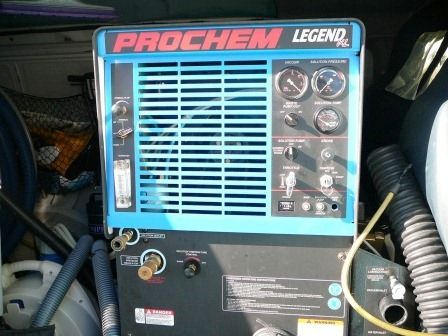
Our carpet cleaning van holds 80-100 gallons of fresh, highly filtered water. If we need to refill on the road, we use a portable water filtration system. We do this to reduce microscopic contaminants and city additives such as calcium, which may be good for teeth but definitely not carpets. Also, unlike most carpet cleaners near you, we don't use any rinsing agents—just purified steam. Our truck-mount uses a heat exchanger that produces a water temperature of 206-212 degrees at the wand tip. ( 32 degrees outside ambient temperature). The result is a powerful steam-cleaning rinse that removes contaminants, sanitizes carpet fibers, and leaves zero soapy residue that attracts new soil.
Truck-Mount vs Portable Carpet Extraction
When looking for a carpet cleaner near you, ask whether they use a portable extractor or a truck-mounted machine. The water temperature mentioned in Step 4 isn’t the only difference. A major distinction is vacuum power. A typical portable carpet extractor produces roughly 4 mechanical horsepower and operates on two standard 15-amp electrical circuits.
By comparison, our truck-mounted systems produce 20–30+ horsepower of vacuum power, allowing them to generate significantly greater airflow over long distances. Combined with our multi-pass dry, that additional vacuum power provides a much deeper extraction and faster drying times.
A highly skilled technician using a high-performance portable machine can produce very good results, but achieving the same level of cleaning as a truck-mounted system generally requires 3 or more re-cleaning passes to extract as much as a truck-mounted system. Portable equipment does not provide the same vacuum power as a truck-mounted system.
We offer both portable and truck-mounted carpet cleaning. Portable equipment is effective, but it requires more work from the technician and typically takes longer to achieve the desired result. A portable fee may be required.
Why Choose Our Natural Carpet Cleaning Company in Montgomery County, PA & Philadelphia?
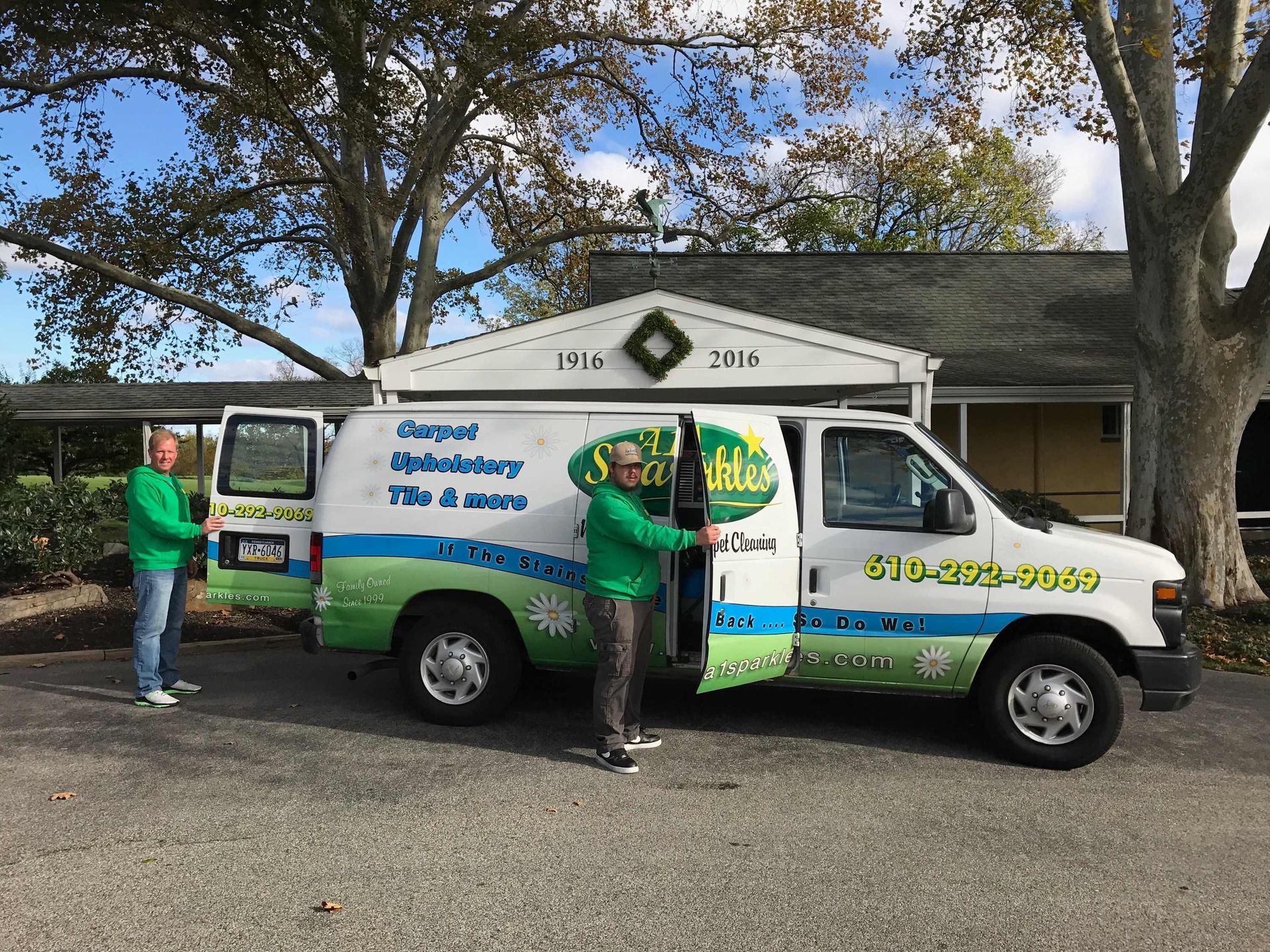
A1 Sparkles has been Montgomery County and Philadelphia homeowners' trusted carpet cleaning choice for over 26 years. Here is what backs up that reputation.
Safe for Children, Pets, and Allergy Sufferers
Many carpet cleaning companies rely on chemical detergents that can worsen allergies and leave behind sticky residue that attracts new soil. At A1 Sparkles, we use a non-toxic hydrogen peroxide-based solution and purified steam rinse instead. Your carpets come out soft, fresh, and residue-free, with no harmful chemicals left behind.
Trained Technicians, Not Subcontractors
Every job is handled by our own trained technicians. As a local cleaning company with over 26 years serving Montgomery County, our team knows the homes and conditions they are walking into before they arrive.
We Remember the Details So You Do Not Have To
One of the most common complaints we hear from new customers is having to explain their home from scratch on every visit. At A1 Sparkles, we keep track of your preferences, your home layout, and any areas that need special attention so every visit runs smoother than the last.
You Can Trust Our Team to:
- Arrive on time
- Communicate clearly before, during, and after the service
- Respect your space and belongings
- Leave no mess behind
If you are still weighing your options, our guide on how to hire the best carpet cleaner walks you through the questions every homeowner should ask before booking a service. It covers what certifications matter, what red flags to watch for, and what a professional carpet cleaning job should actually include.
When you are ready to move forward, visit our full range of cleaning services across Montgomery County.
Choose the Right Carpet Cleaning Package for Your Home
Every Montgomery County household is different. A home dealing with dirty carpets from years of heavy use has different needs than a guest bedroom that sees light traffic. We have three packages that are designed to match the level of cleaning your carpets actually need.
5-Step Basic Carpet Cleaning
$210 (3 Room Special)
Book Now - Save $15
$75 per room after | Open areas only | Per 300 sq ft | Odors, stains, and embedded soil are extra
Best for busy families who need regular carpet cleaning and a thorough refresh. This package includes:
1. Carpet Inspection
2. Hot Hydrogen Peroxide Pre-treatment
3. Green Spotter
4. Purified Steam Rinse
5.
Single Shot Extraction
10-Step Signature Carpet Cleaning
$259 (3 Room Special)
Book Now - Save $25
$93 per room after | Per 300 sq ft | Odors, stains, and embedded soil are extra
This is our most popular package. Best for households with pets, kids, or carpets dealing with pet stains, odors, or buildup for over a year without a professional clean. This package includes:
1. Carpet Inspection
2. Establish Protected Areas
3. Furniture Moving and Tabbing
4. Hot Hydrogen Peroxide Pre-treatment
5. Green Spotter
6. Hand Scrubbing
7. Purified Steam Rinse
8. Double Shot Extraction
9. Free Shoe Covers
10. Lifetime Supply of Carpet Spotter
15-Step Chairman Carpet Cleaning
$397 (3 Room Special)
Book Now - Save $50
$149 per room after | Per 300 sq ft | Odors are extra
Built for high-traffic areas and basement carpet that needs deep restoration. This is the right choice for carpets dealing with heavy embedded soil, stubborn odors, or years of buildup. Our ultimate package includes:
1. Carpet Inspection
2. Establish Protected Areas
3. Pre-Vacuum
4. Furniture Moving and Tabbing
5. Hot Hydrogen Peroxide Pre-treatment
6. Green Spotter
7. Hand Spotting
8. Hand Scrub (safe for all carpet fibers)
9. Power Scrub
10. Purified Steam Rinse
11. Triple Shot Extraction
12. Anti-Allergen treatment
13. Scotchgard
14. Free Shoe Covers
15.
Lifetime Supply of Carpet Spotter
Our Carpet Cleaning Satisfaction Guarantee
Not 100% satisfied before we leave? We will re-clean the area at no charge. We also match any comparable service price if you find a lower quote elsewhere.
Carpets Need More Than Routine Vacuuming
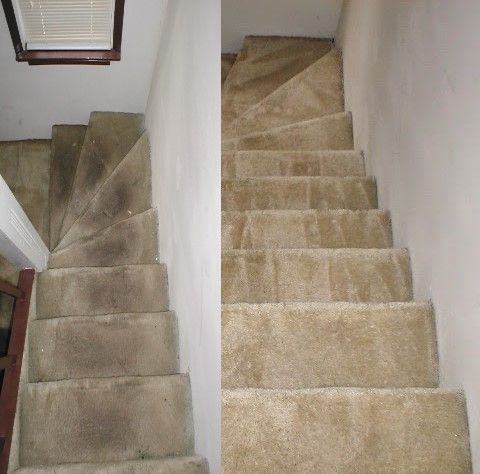
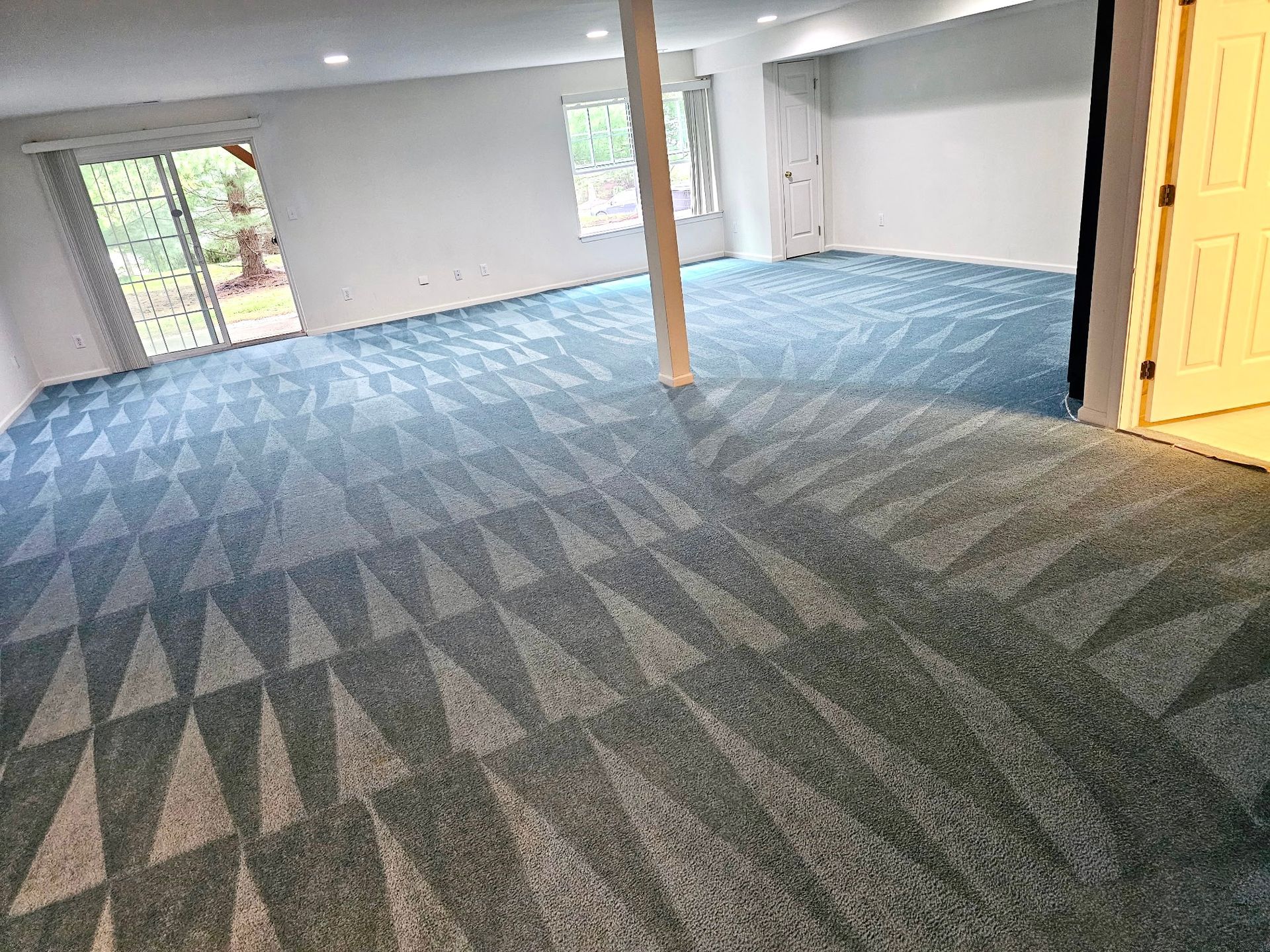
Vacuuming keeps surface debris under control, but it doesn’t reach what builds deeper in the fiber. Most Montgomery County homes face a specific set of conditions that accelerate that buildup faster than most homeowners expect. These are:
- Vacuuming cannot reach what baseboard heating pushes in. These systems, common in older Montgomery County homes, recirculate fine dust and particles through living spaces and drive debris deeper into carpet fibers with every heating cycle.
- Pet dander and accidents go deeper than a vacuum can reach. Embedded dander, pet urine, and repeated traffic from animals wear down fiber structures in ways that surface cleaning cannot reverse.
- Seasonal pollen does not leave when you close the windows. It settles into carpet fibers during spring and fall and continues contributing to indoor allergen levels until it is extracted professionally.
- Winter salt and boot grit grind into carpet backing with every step. That abrasive buildup dulls fibers and causes structural wear that vacuuming cannot remove.
- Basement carpet holds moisture in ways surface-level cleaning cannot. Montgomery County's older housing stock makes basement humidity common, and fibers that trap moisture become susceptible to mold growth and persistent odor.
- Carpets directly affect the air your family breathes. As fibers accumulate dust, dander, pollen, and other particles, your HVAC system pulls those contaminants back into circulation with every cycle, lowering indoor air quality throughout the home.
- Odors trapped in carpet fibers do not respond to vacuuming or spot treatment. If a lingering smell returns after cleaning, the source is almost always deeper in the fiber or backing, which is where professional extraction reaches. For more on what causes persistent carpet odor and how to fix it, read our
carpet odor guide.
Proudly Serving Montgomery County, PA & Philadelphia
A1 Sparkles provides cleaning services throughout Montgomery County, PA, and Philadelphia. We help local families and businesses keep their homes cleaner and healthier with zero-residue carpets and consistent results.
We regularly work in Abington, Cheltenham, Blue Bell, Lansdale, Norristown, Ambler, King of Prussia, Gladwyne, Wayne, Villanova, Ardmore, Harleysville, and Collegeville, bringing the same standard of care to every home we visit.
Carpet cleaning is often just the starting point. Many homeowners also benefit from
carpet stretching and repair for rooms where buckling or damage has developed over time,
upholstery cleaning for sofas and chairs that see daily wear, or
rug cleaning for area rugs that need dedicated care.
FAQ Carpet Cleaning
How often should homeowners have their carpets professionally cleaned?
Can you clean area rugs in homes?
How long does it take for the carpet to dry?
Do I need to move furniture?
Schedule Your Carpet Cleaning Today!
Your carpets take more than you see every day. Pet dander, seasonal pollen, tracked-in grit, and years of foot traffic work deep into the fiber long before the damage shows on the surface. A professional clean removes what vacuuming leaves behind, restores texture and color, and leaves your home smelling fresh from the floor up.