
How Often Should Upholstery Be Professionally Cleaned
A general rule for most homes is that professional upholstery cleaning should be done once every 12 to 18 months. This keeps fabric fibers from breaking down under the weight of accumulated dust and oils, and it prevents odors from settling deep into the cushions.
However, the ideal frequency can still vary depending on your household conditions and lifestyle. This is because upholstered furniture sees a lot of daily use. Sofas, armchairs, and dining chairs collect dust, skin cells, pet dander, and spills over time, even when they look relatively clean on the surface.
Knowing how often upholstery should be professionally cleaned helps Montgomery County homeowners protect their furniture and keep their living spaces healthier. And understanding what drives that schedule makes it easier to stay ahead of dust buildup and allergens in upholstery before it becomes a bigger problem.
When heavy furniture is dragged or frequently repositioned, it pulls against the carpet's anchoring points. The weight of sofas, beds, and cabinets can stretch or compress carpet fibers unevenly, weakening the material's original tension and creating loosened sections over time.
Recommended Upholstery Cleaning Frequency
How often your upholstery needs professional cleaning depends on how your home is used, who uses it, and what your furniture is made of. The following guidelines cover the most common household situations.
Every 12 to 18 Months for Most Households
For most homes, professional upholstery cleaning every 12 to 18 months is sufficient to remove accumulated dust, allergens, body oils, and everyday soil before they become deeply embedded in the fabric. This schedule helps maintain appearance, reduce odors, and extend the life of your furniture.
Every 6 to 12 Months for Homes with Pets, Children, or Allergy Sufferers
If pets frequently use the furniture, children eat or play on upholstered pieces, or someone in the household suffers from allergies or asthma, more frequent cleaning is recommended. Scheduling service every 6 to 12 months helps control pet dander, allergens, stains, and odors before they become difficult to remove.
Every 3 to 6 Months for High-Traffic Furniture
Furniture that sees constant daily use, such as a family room sofa, sectional, or favorite recliner, can accumulate dirt and oils much faster than lightly used pieces. Cleaning every 3 to 6 months helps preserve fabric condition, maintain a fresh appearance, and prevent premature wear.
As Needed for Stains, Odors, and Spill Events
Do not wait for your next scheduled cleaning if spills, pet accidents, lingering odors, or visible staining occur. Prompt professional treatment improves the likelihood of complete stain removal and helps prevent contaminants from settling deeper into the upholstery.
Upholstery Cleaning Schedule by Fabric Type
Fabric type is another factor that affects how often cleaning is needed. Checking the manufacturer's care label can help confirm what your specific upholstery can handle between professional visits.
Every 6 to 12 Months: Delicate Natural Fabrics
Materials such as linen, cotton, velvet, and other natural-fiber upholstery tend to show soiling and wear more quickly than synthetic fabrics. Professional cleaning every 6 to 12 months can help preserve their appearance and prevent embedded dirt from damaging the fibers.
Every 12 to 18 Months: Most Synthetic Upholstery
Tightly woven synthetic fabrics, such as polyester and microfiber blends, generally resist staining and everyday wear more effectively. For most households, professional cleaning every 12 to 18 months is sufficient to maintain cleanliness and extend furniture life.
How Allergens and Dust Build Up in Furniture
Upholstered furniture does more than provide a place to sit. Over time, it collects a range of contaminants that work their way past the surface and into the fabric layers below. Understanding how that buildup happens makes it easier to see why regular professional cleaning matters.
Pet Hair and Dander Settle Deep Into Fabric
Homes with dogs and cats often experience faster accumulation of debris within upholstered furniture. Pet hair, dander, and natural skin oils cling to fabric fibers and become embedded beneath the surface, making them difficult to remove through regular household cleaning alone.
Dust Mites Thrive in Soft Furnishings
Dust mites naturally gravitate toward upholstered furniture because cushions and fabric provide an ideal environment for the skin cells and organic matter they feed on. As dust and debris accumulate over time, so can dust mite populations, which may contribute to allergy and asthma symptoms in sensitive individuals.
Body Oils and Everyday Use Build Up Residue
Natural body oils, sweat, and daily contact gradually transfer onto upholstery every time furniture is used. Over time, these oils bind with dust and dirt, creating a sticky residue that settles into fabric fibers and contributes to discoloration, odors, and deeper buildup within the cushions.
Airborne Particles Settle Into Upholstery Over Time
Dust, pollen, and other airborne particles naturally circulate indoors and gradually settle onto upholstered surfaces. These particles become trapped within fabric fibers and continue to accumulate with everyday use.
Spills and Food Particles Become Embedded in Fabric
Even small spills, crumbs, and food particles can seep into upholstery fibers during daily use. Once absorbed, they break down over time and contribute to deeper buildup that is difficult to remove with surface cleaning alone.
Humidity and Moisture Encourage Deep Fiber Buildup
Indoor humidity and occasional moisture exposure can cause dust and debris to cling more easily to fabric surfaces. Over time, this allows buildup to settle deeper into cushions and upholstery layers if not properly maintained.
Signs Your Upholstery Needs Professional Cleaning
Even with a regular cleaning schedule, furniture sometimes needs attention before the next scheduled appointment. Knowing what to look for helps you act early and avoid damage that becomes harder to reverse the longer it sits.
Watch for these signs that your upholstery is due for a professional cleaning:
- Persistent odors that remain even after airing out the room or using fabric spray.
- Visible staining from food, drinks, pet accidents, or everyday use that surface cleaning has not been removed.
- Dull or matted fabric where the texture looks flat, or the color appears faded compared to less-used areas.
- Increased allergy symptoms among household members, which can signal a buildup of dust, dander, or mold spores in the fabric.
- A stiff or crunchy feel to cushions or armrests, often caused by dried spills or oils that have settled into the fibers.
If more than one of these apply, it is a strong signal that more frequent cleaning is needed before further wear sets into the fabric of your upholstery furniture.
Benefits of Professional Upholstery Cleaning
Regular vacuuming and spot treatments help with surface maintenance, but they do not reach the deeper layers of fabric where most buildup occurs. With a professional upholstery cleaning services, it can go further, removing what everyday care leaves behind and delivering results that extend the life of your furniture.
Deeper Cleaning Than DIY Methods
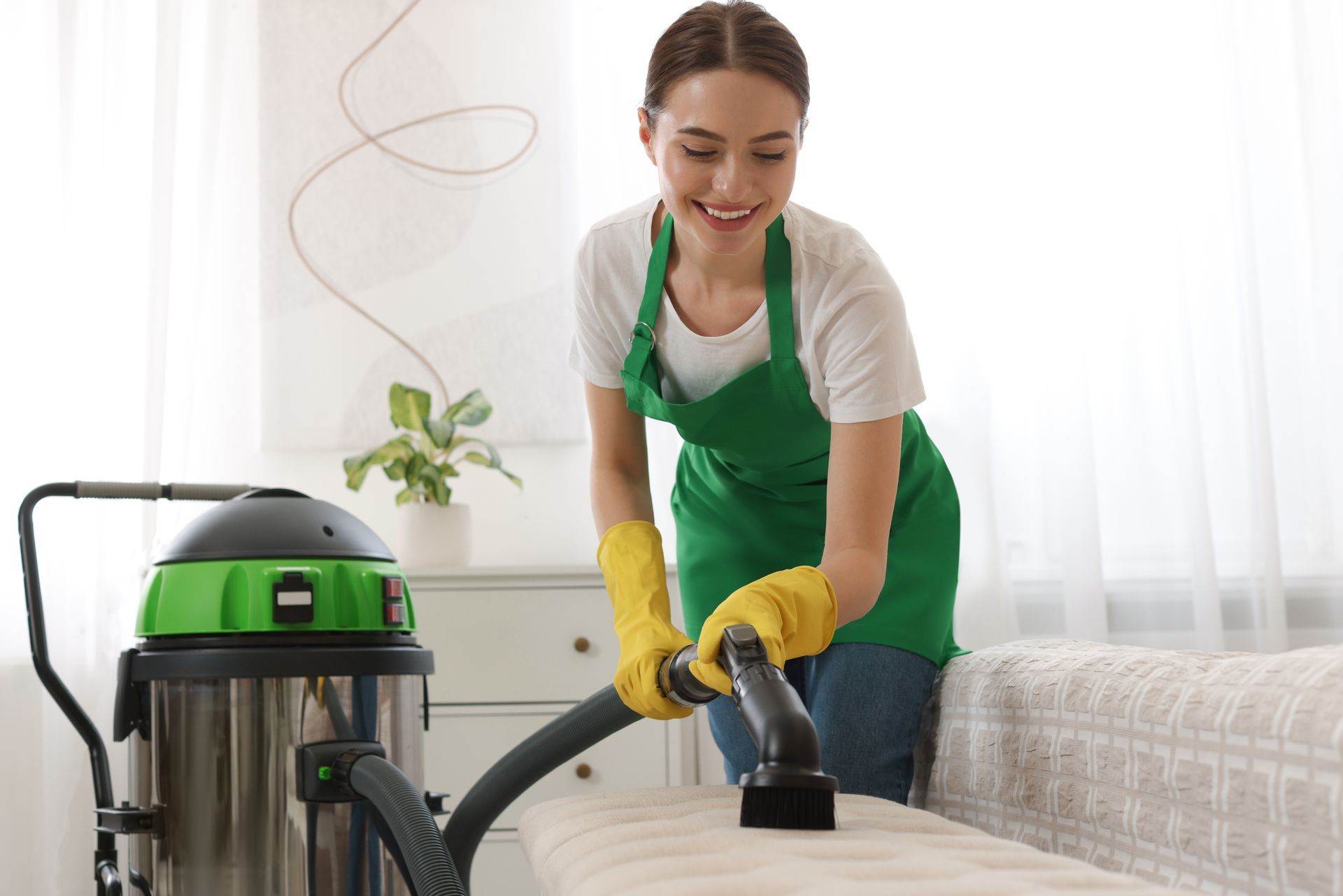
Professional equipment uses steam cleaning and extraction methods that pull dirt, allergens, and bacteria from deep within fabric fibers. Rental machines and store-bought sprays may work at the surface level, but they rarely match the pressure and temperature needed to steam clean upholstery thoroughly.
Extended Furniture Lifespan
Dirt and oils act as abrasives inside fabric weaves, gradually causing fabric degradation with every use. Removing that buildup through fabric protection cleaning and periodic professional treatment keeps the material in better condition for longer, which protects your investment in quality furniture.
Improved Indoor Air Quality
Every time someone sits on a sofa loaded with dust, dander, and pollen, those particles get released back into the room. That’s why professional cleaning can help reduce the reservoir of airborne irritants trapped in your furniture, which can make a measurable difference for allergy and household members with asthma.
Stain Removal and Fabric Protection
Stubborn stains that resist home treatment often respond to professional stain removal upholstery techniques, which use targeted solutions matched to specific fabric types. Many professional cleaning services also apply fabric protection treatments after cleaning, which slows future soiling and makes spills easier to manage.
How to Maintain Upholstery Between Cleanings
Professional cleaning does the deep work, but what happens between appointments matters too. A few consistent habits can help slow down buildup, reduce wear, and keep your furniture looking presentable in the months between professional visits.
1. Vacuum Upholstery Weekly to Reduce Surface Buildup
Vacuuming upholstered surfaces weekly is one of the most effective things you can do for fabric sofa maintenance. Use an upholstery attachment to get into seams and crevices where dust and pet hair tend to collect. This does not replace deep cleaning, but it does reduce the load that builds up in the fabric over time.
2. Clean Spills Immediately to Prevent Permanent Stains
Address spills immediately rather than letting them dry. Blot the area with a clean cloth and work from the outside of the stain inward to avoid spreading it. Rubbing or scrubbing the area will only make the stain worse.
3. Rotate and Flip Cushions to Promote Even Wear
Rotating cushions regularly also helps distribute wear more evenly across the piece. Cushions that stay in the same position absorb more pressure and soiling in concentrated areas, which accelerates visible wear. Flipping and rotating them every few weeks helps the material hold up longer and look better over time.
Common Upholstery Cleaning Mistakes
Even well-intentioned upholstery cleaning efforts can cause more harm than good when the wrong approach is used. These are some of the most common mistakes Montgomery County homeowners make when trying to clean upholstery on their own:
Using Too Much Water
Over-wetting fabric is one of the most frequent DIY errors. This is because excess moisture seeps into cushion fill and backing materials, where it can take days to dry. That trapped moisture encourages mold and mildew growth, which is far harder to address than the original stain.
Using the Wrong Cleaning Products
Not all fabric types respond the same way to cleaning solutions. Harsh chemicals or general-purpose cleaners can strip color, weaken fibers, or leave residue that attracts more dirt over time. That’s why it’s important to always check the manufacturer’s care label before applying any product, and test in a hidden area first.
Scrubbing Instead of Blotting
Scrubbing a stain feels like the natural response when something spills, but it pushes the material deeper into the fabric and spreads it outward. Blotting with a clean cloth and working from the edges inward gives you a much better chance of lifting the stain without damaging the surrounding fabric.
Waiting Too Long to Act
Spills and stains become significantly harder to remove once they dry and bond with the fabric fibers. The longer a stain sits, the more likely it is to become permanent. Acting quickly on fresh spills is one of the simplest ways to avoid an expensive professional stain removal visit.
Conclusion
Keeping up with a regular upholstery cleaning schedule does not have to feel complicated. Once you understand how buildup happens and what your furniture is exposed to daily, it becomes much easier to stay ahead of the wear before it causes lasting damage.
At A1 Sparkles, we have been helping Montgomery County homeowners care for their furniture and living spaces for over 26 years. We are a local, veteran-owned business, and we bring the same attention to detail to every upholstery job that we bring to every service we offer.
If your furniture is overdue for a deep clean, or you are not sure where to start, we are happy to help you figure out the right schedule for your home. Give us a call at (610) 292- 9069 or book an appointment online to get started.